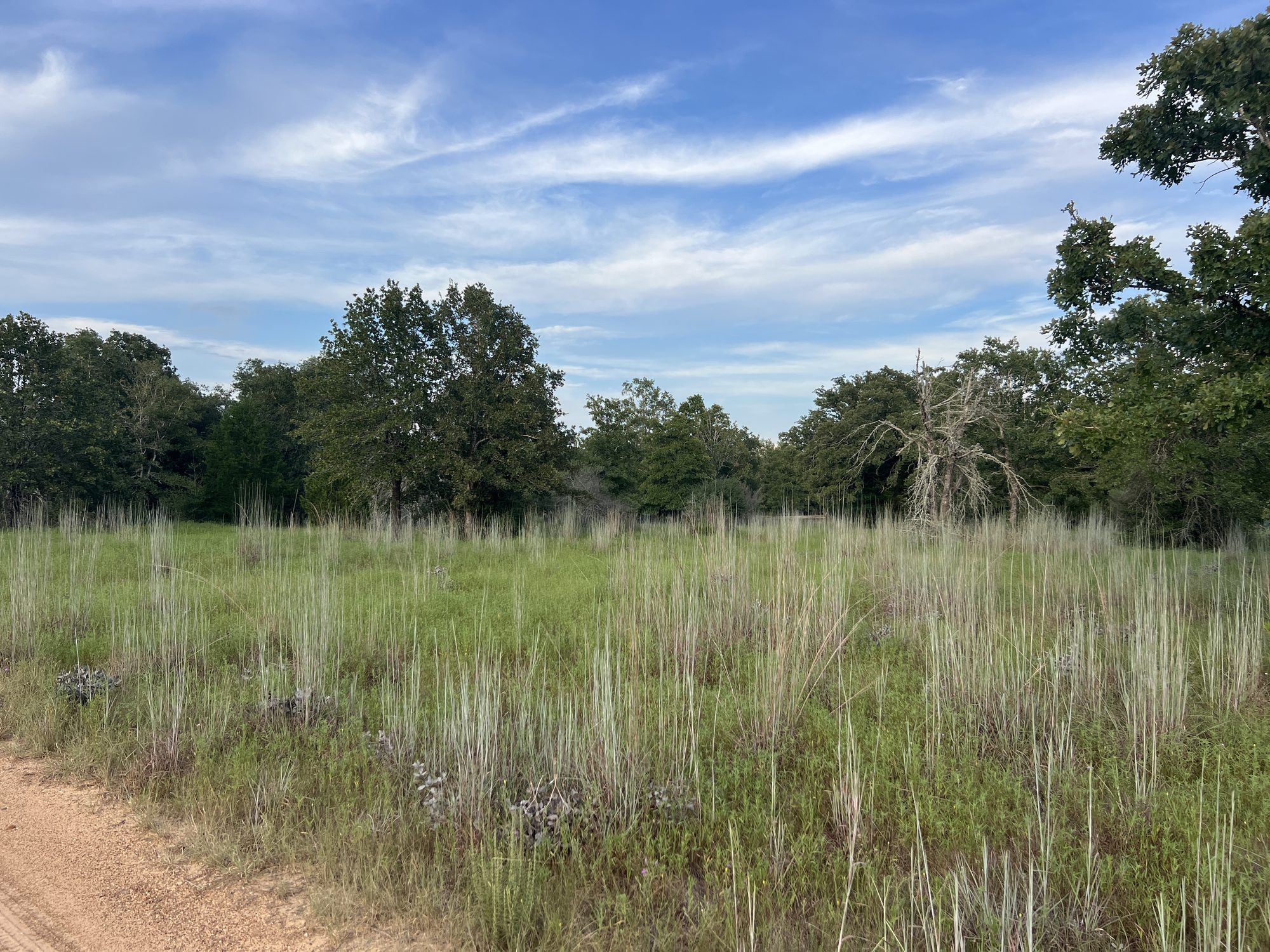
The Easterwood Banding Station, located at the Ecology & Natural Resources Teaching Area (ENRTA) in College Station, Texas, was established in fall 2024 to provide undergraduate students with hands-on experience in bird research and contribute to long-term monitoring efforts.
Bird banding involves safely capturing birds and fitting them with lightweight aluminum leg bands, each bearing a unique identification number. When a banded bird is encountered again, researchers can use this information to better understand bird movements, longevity, and migration patterns.
The station focuses on site fidelity (whether birds return to the same location) and residence time (how long birds remain at a particular site). It gives undergraduate students practical experience in bird research while contributing to ongoing data collection on local and migratory birds.
Results to Date
Totals as of October 29, 2026. The station began operating on October 31, 2024.
Station at a Glance
- LocationEcology & Natural Resources Teaching Area (ENRTA), College Station, Texas
- EstablishedOctober 2024
- ScheduleYear-round, usually once a week. Sessions start 30 minutes before sunrise and last 3–4 hours.
- Nets9 mist nets (five 12 m and four 6 m)
- ProtocolClosely follows the MAPS (Monitoring Avian Productivity and Survivorship) protocol, modified to fit around class schedules
- PermitBanding is conducted under the federal master banding permit held by Dr. Chris Butler. Records are submitted to the USGS Bird Banding Laboratory.
Most-Captured Species
Notable Captures
A few of the birds that have made the station memorable.
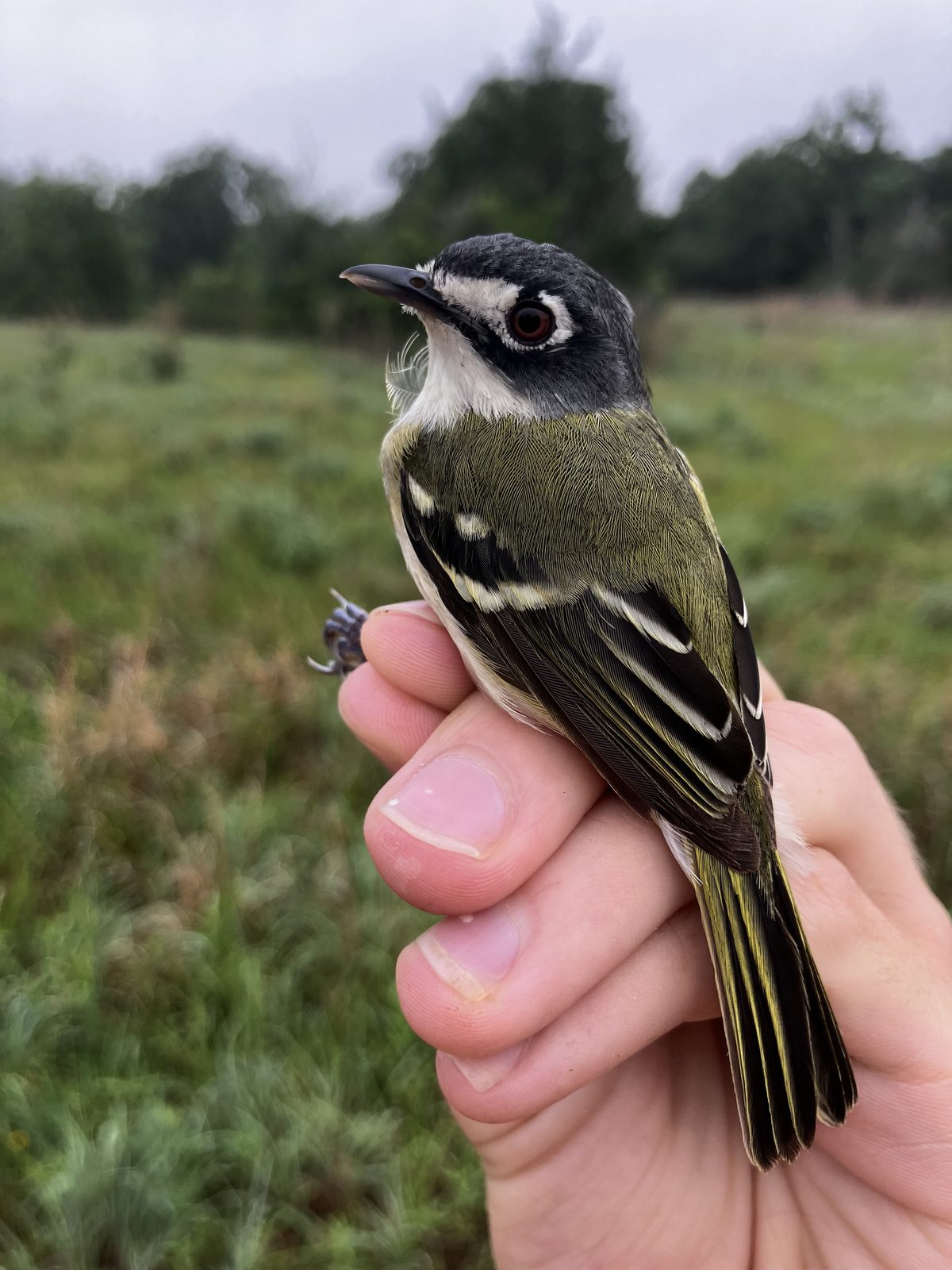
Black-capped Vireo
On May 1, 2025, we captured a second-year female Black-capped Vireo, the first documented record of this species in Brazos County. We could not band her because the species is listed as endangered in Texas, but the encounter was an exciting and unexpected one for the station.
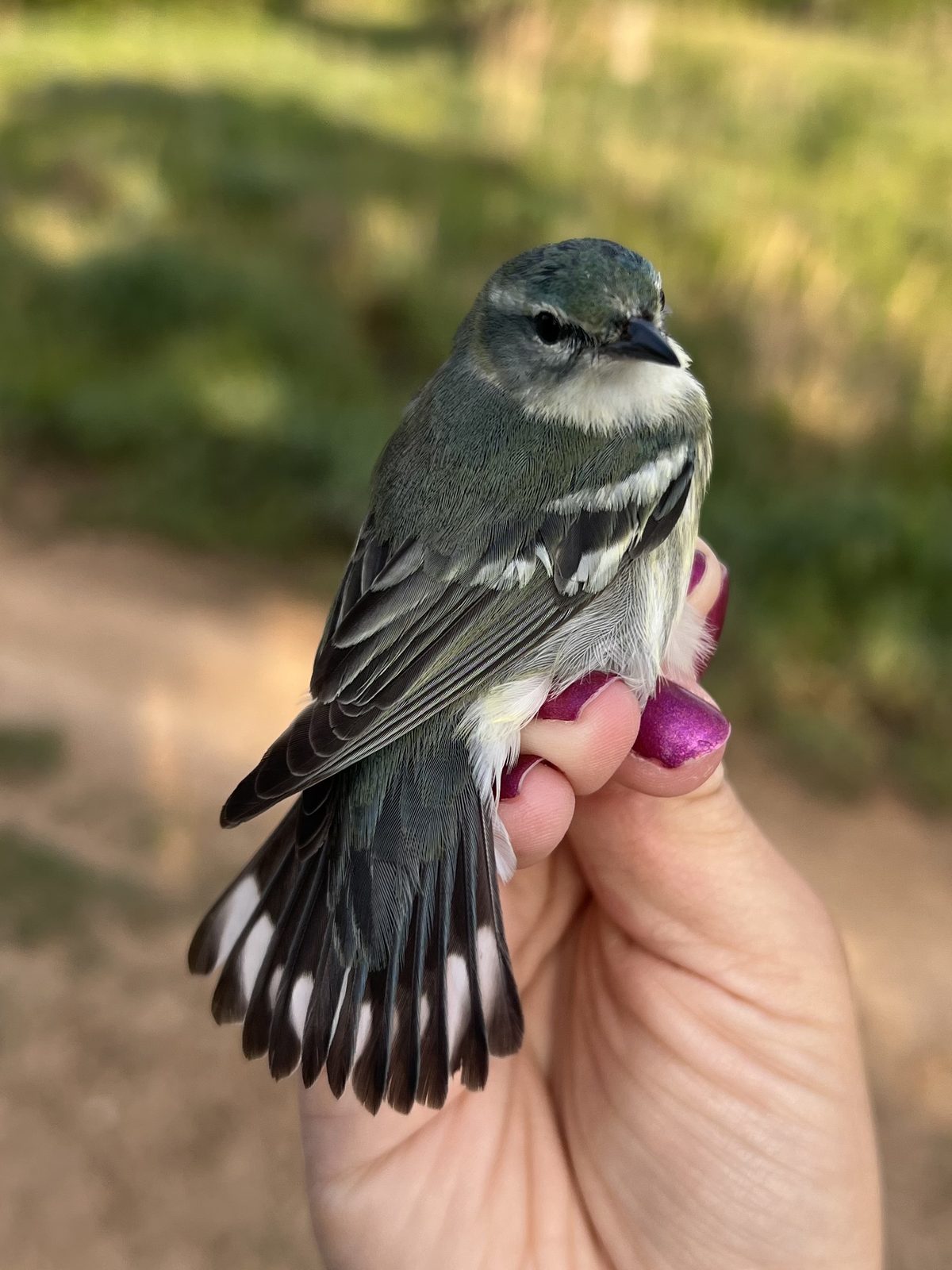
Cerulean Warbler
On May 5, 2025, we captured and banded an after-second-year female Cerulean Warbler. She was the first Cerulean Warbler banded in Brazos County and one of relatively few banding records of the species from inland Texas.
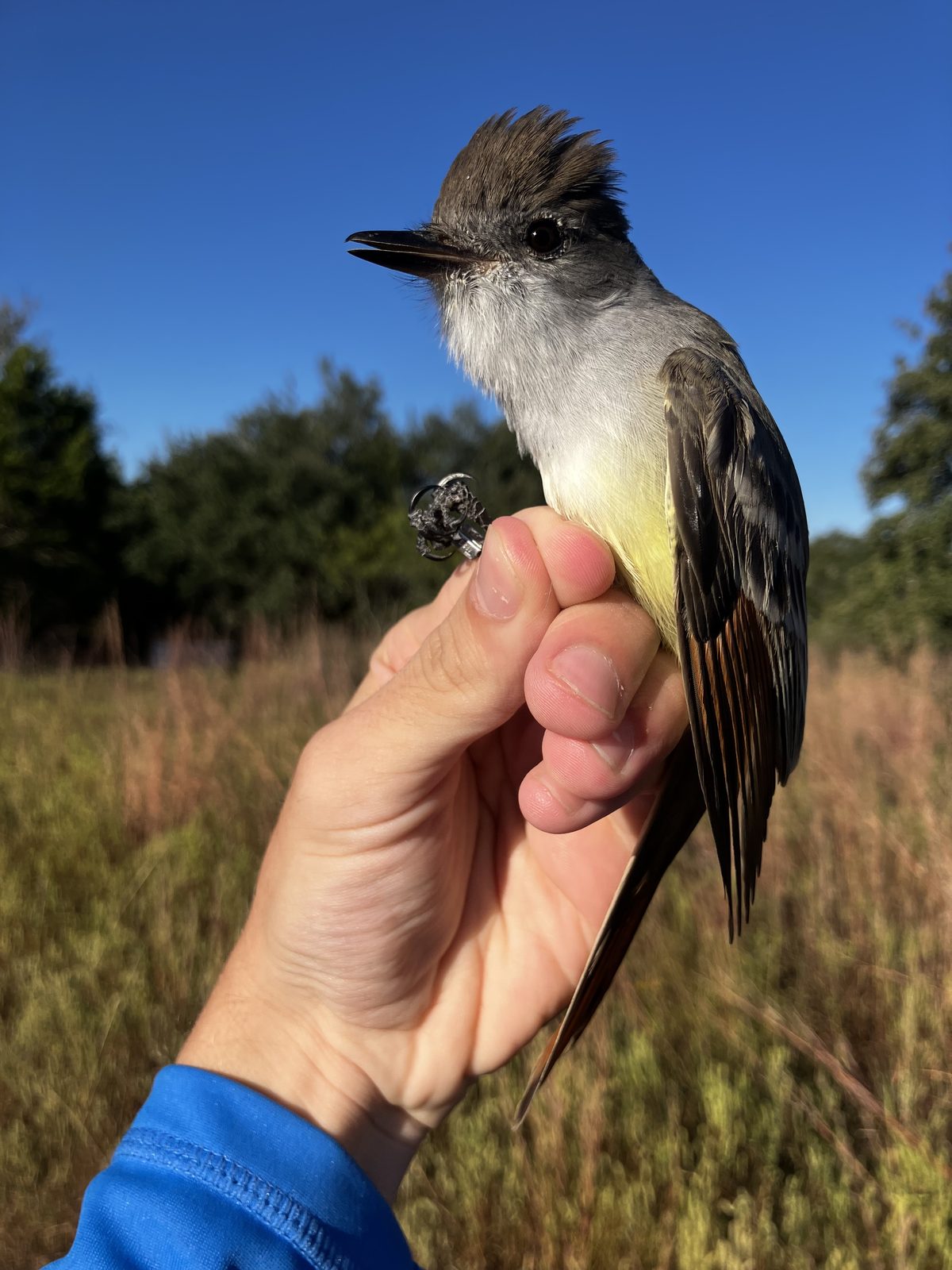
Ash-throated Flycatcher
We captured and banded an after-hatch-year male Ash-throated Flycatcher, a species rarely encountered in Brazos County. He was the first of his species banded in the county.
Northern Cardinal
On January 16, 2025, we captured a male Northern Cardinal that was already wearing a band. After reporting the band number, we learned he had originally been banded on May 20, 2021, as an after-hatch-year bird, making him at least four and a half years old when we first met him. We have continued to recapture him periodically, and he has become a regular visitor to the station.
Ovenbird
On April 30, 2025, we banded a second-year Ovenbird weighing 16 grams. When we recaptured the same bird one week later, on May 7, it weighed 23 grams, a gain of nearly 44% of its original body weight. It was a striking glimpse of how quickly a migrating bird can rebuild its body condition while stopping over to refuel.
Get Involved
No previous experience is required!
Who can join
The Easterwood Banding Station welcomes undergraduate students, graduate students, and community members interested in participating in bird research. Participants learn about the birds that use the Ecology & Natural Resources Teaching Area and contribute to ongoing monitoring efforts. Priority is given to participants interested in developing their own research projects or gaining hands-on experience for future careers in wildlife research and conservation.
What you’ll learn
On a first visit, participants receive an introduction to station procedures and watch how birds are identified, banded, measured, and released. Beginners can help record data and accompany experienced banders on net checks. With continued participation and supervised training, volunteers can develop skills in bird identification, safe handling, extracting birds from mist nets, determining age and sex, and taking measurements. Responsibilities grow as participants gain experience and demonstrate proficiency.
What to bring
Wear closed-toe shoes and clothing suitable for walking through vegetation and spending several hours outdoors. Bring drinking water, insect repellent, and layers appropriate for the weather. A headlamp is helpful for arriving before sunrise. Sessions are canceled or shortened during rain, strong winds, or other unsuitable conditions.
How to sign up
Email the station to get involved. You’ll receive session details and the exact meeting location after signing up. Banding takes place throughout the year, generally once a week, with dates varying according to staff availability and weather.
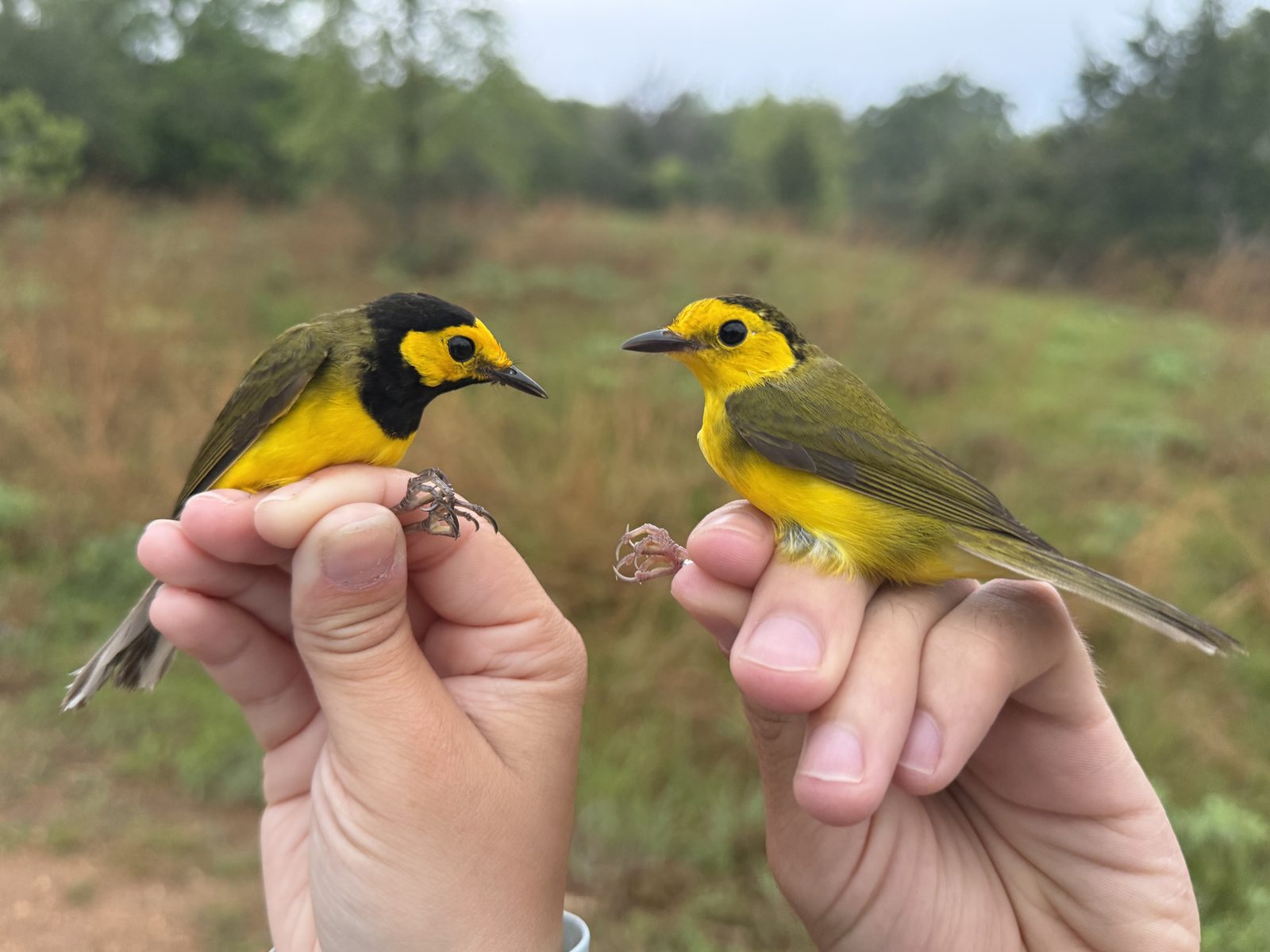
Male (left) and female Hooded Warblers, April 2026
Station Team

Aeris Clarkson
Station Coordinator
Aeris Clarkson is a master’s student in Biology at Texas A&M University working with Dr. Chris Butler. She has field experience across Texas, Arizona, Florida, California, and British Columbia, has banded more than 3,000 birds, and previously served as crew lead for the Yosemite MAPS Station. Her research focuses on avian movement ecology, including American Oystercatcher movements along the Texas coast and hummingbird migration and wintering patterns. At the Easterwood Banding Station, she coordinates banding activities and mentors students, helping them develop field skills and pursue their own research projects.
Brady Schwab, Station Assistant
Frequently Asked Questions
Why band birds?
Each band carries a unique identification number that allows researchers to recognize an individual bird if it is encountered again. These encounters help researchers learn about bird movements, longevity, and use of particular locations. At the Easterwood Banding Station, we are especially interested in whether birds return to the site and how long they remain there.
Does banding hurt birds?
Bands are carefully sized to fit each bird. Using mist nets and handling birds carries a small risk of injury, and we work to keep that risk as low as possible through frequent net checks, trained supervision, and close attention to each bird’s condition. Bird safety is our priority, although even with these precautions, injuries can occasionally occur.
Does the band track the bird’s location?
No. A standard aluminum leg band is an identification marker, not a tracking device, so it does not transmit a signal. Researchers learn where a bird has been when it is encountered again and its band number is recorded.
What happens to the information collected?
The station’s records support long-term monitoring and student research. Banding records are also submitted to the U.S. Geological Survey’s Bird Banding Laboratory, which maintains data used by researchers studying bird populations, movements, and survival.
What should I do if I find a banded bird?
If you find a banded bird or can read a band number, report the encounter at reportband.gov. Record the band number, date, and location, along with any photographs you can take without disturbing the bird. You do not need to capture a bird to report an encounter!
Birds of the Station
A sample of the species captured at the Easterwood Banding Station. Click any photo to enlarge.
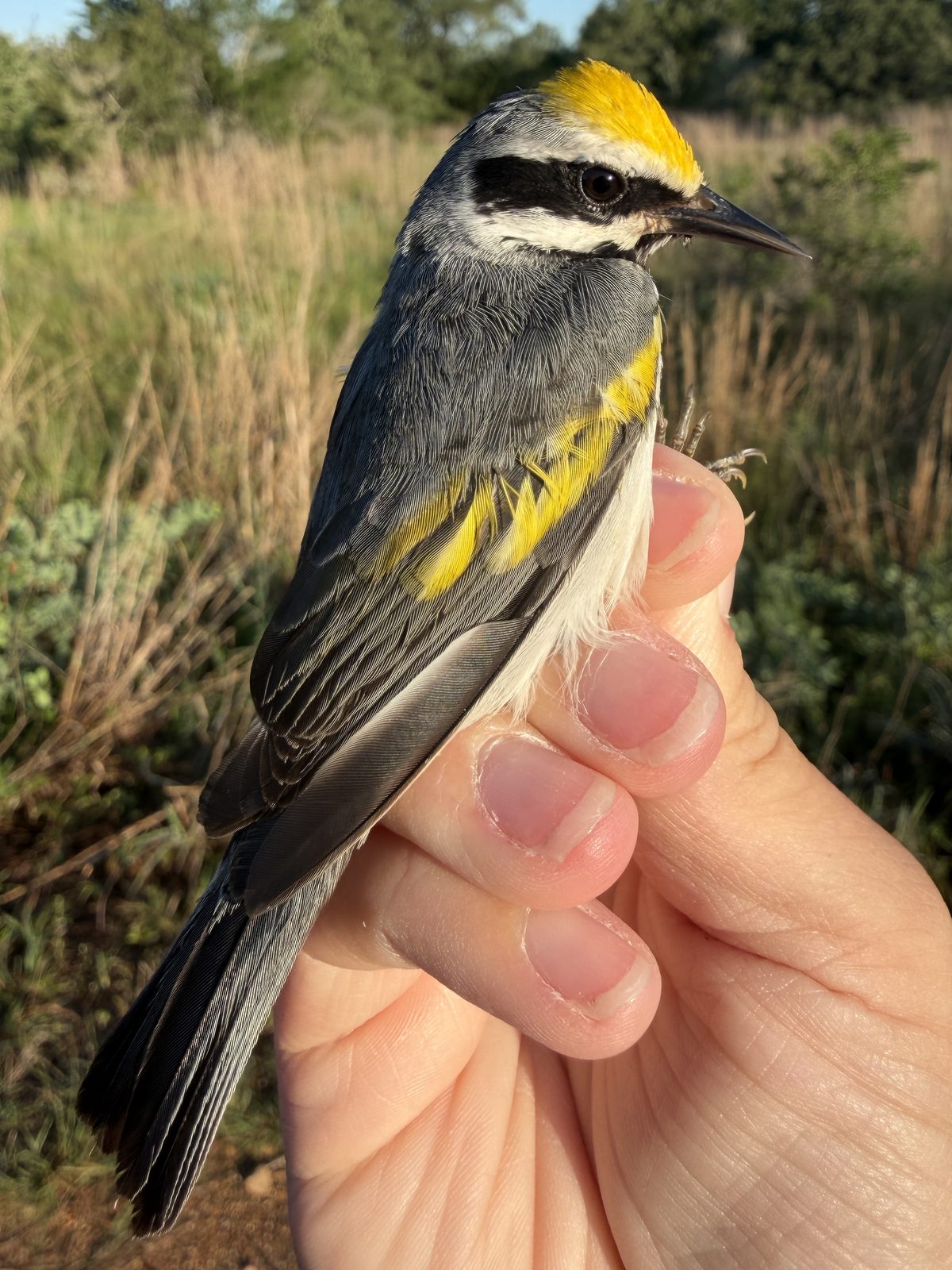
Golden-winged WarblerMay 2026 · Photo: Aeris Clarkson
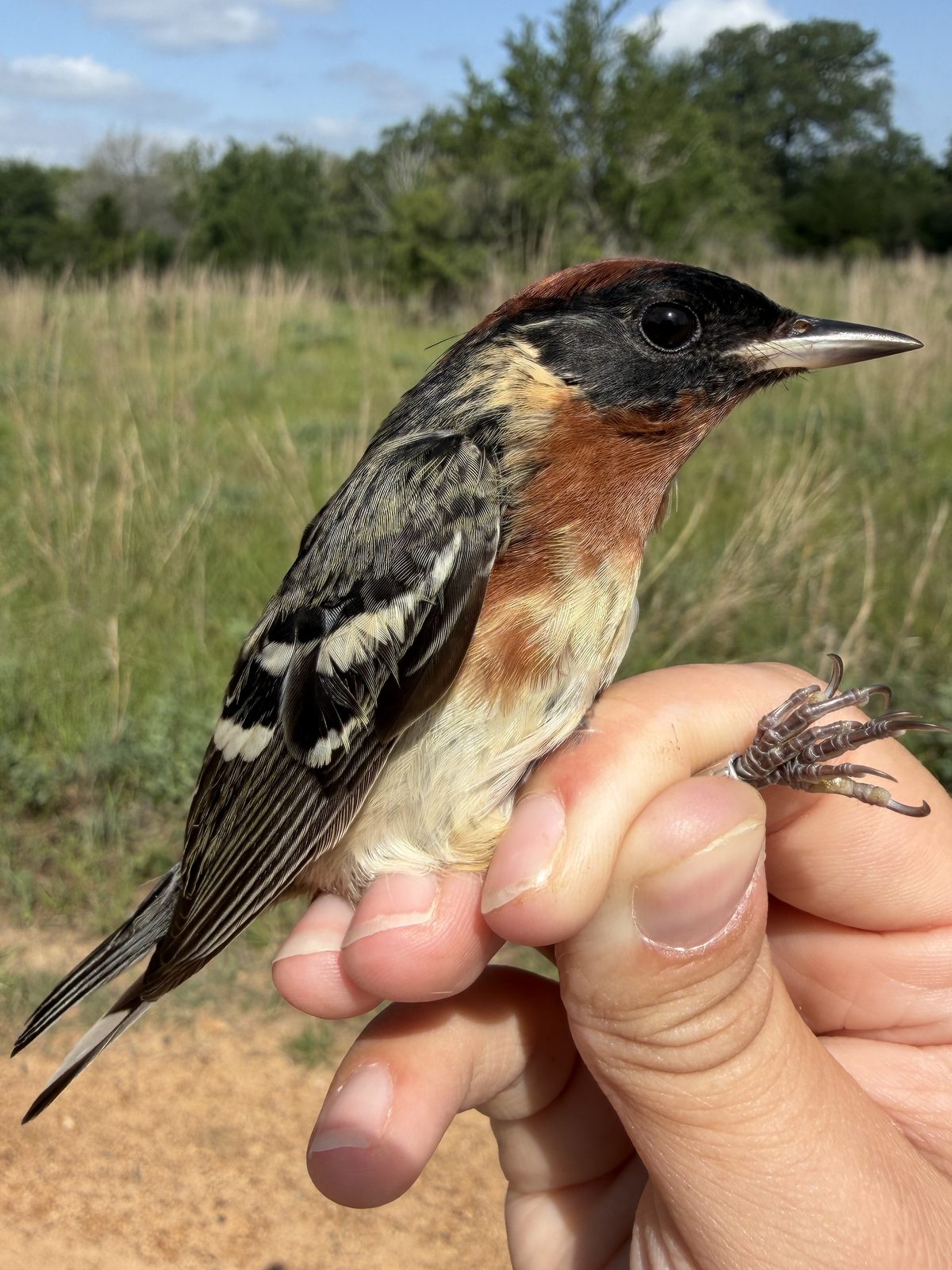
Bay-breasted WarblerMay 2026 · Photo: Aeris Clarkson
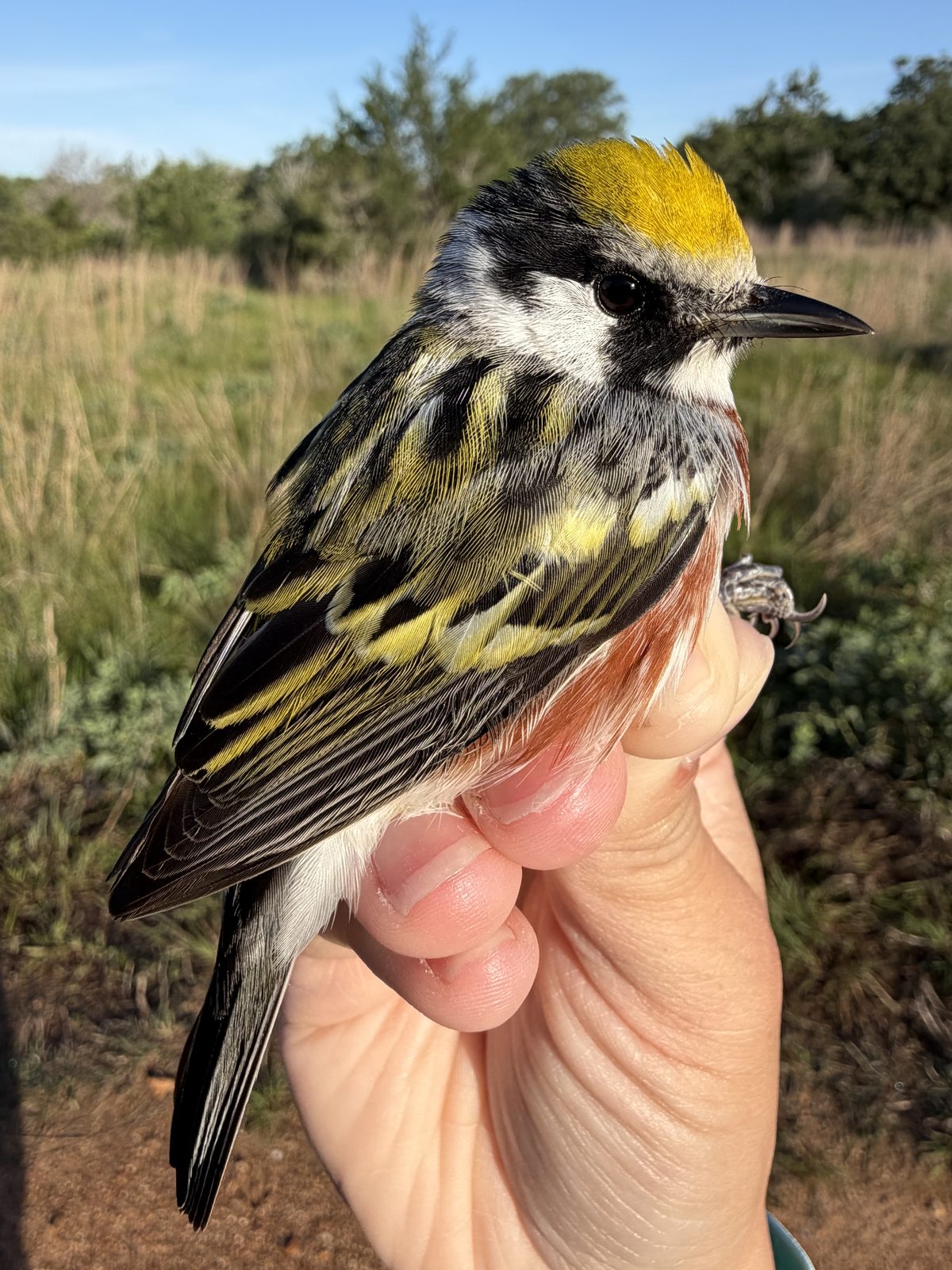
Chestnut-sided WarblerMay 2026 · Photo: Aeris Clarkson
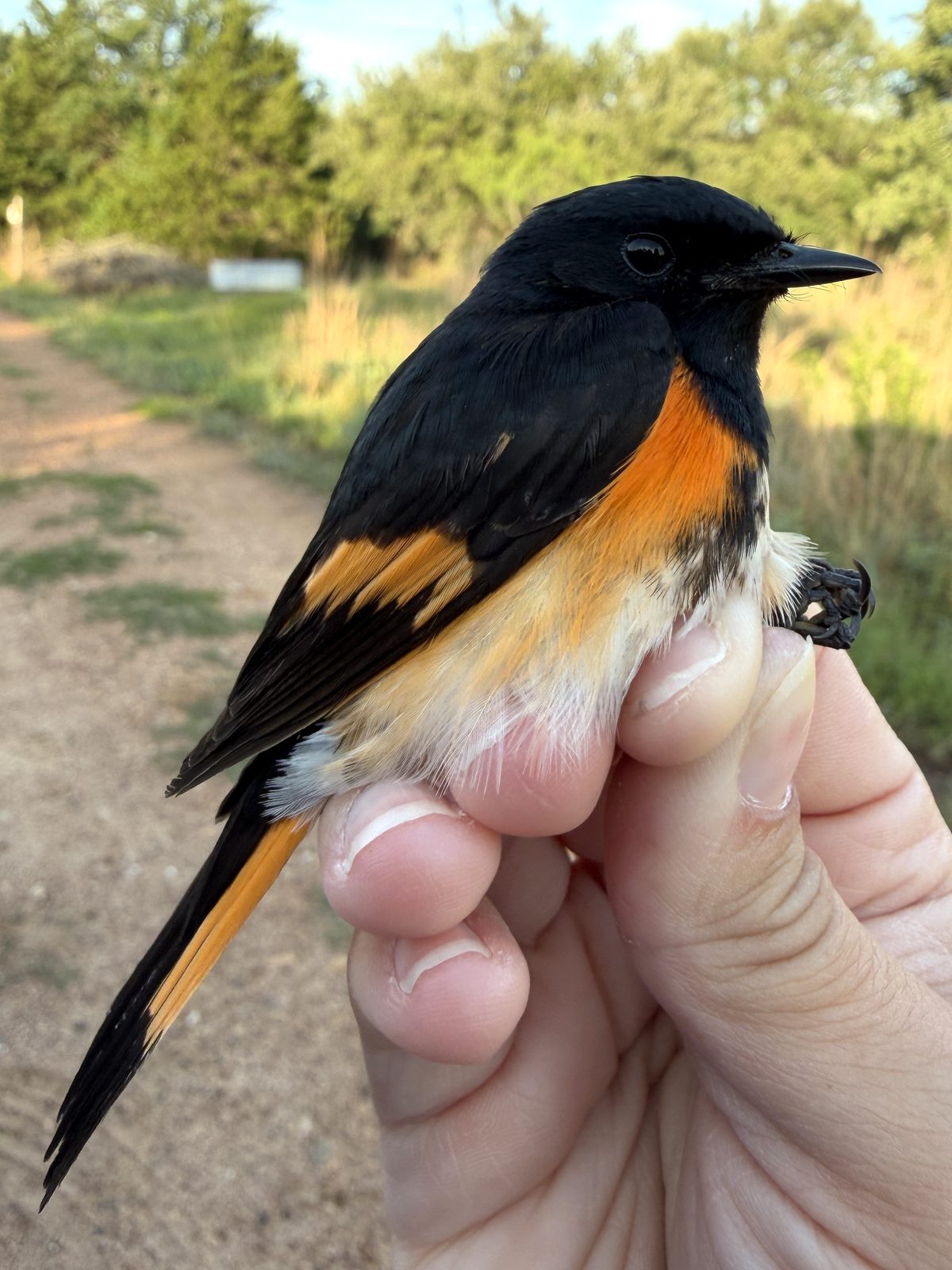
American RedstartMay 2026 · Photo: Aeris Clarkson
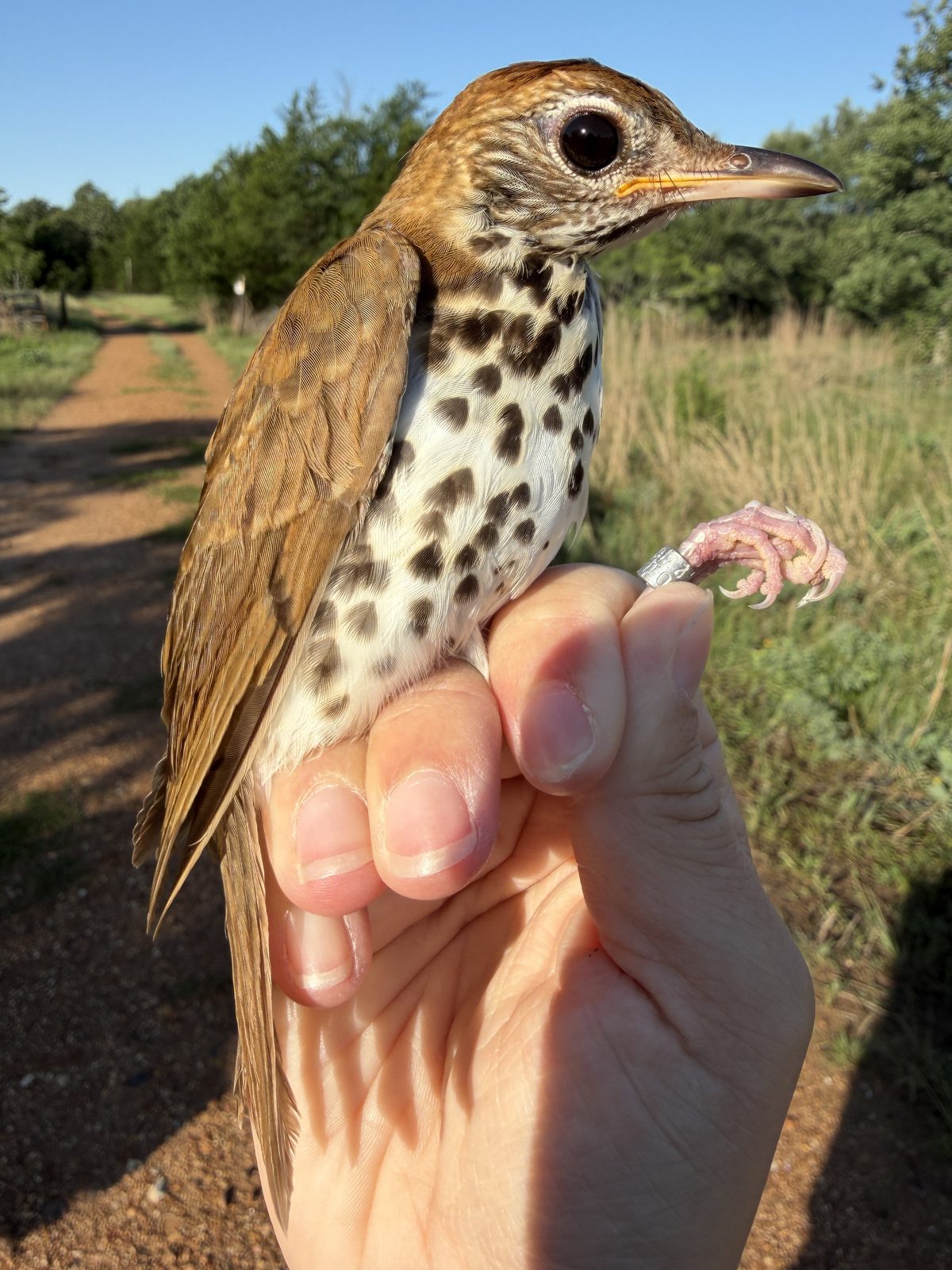
Wood ThrushMay 2026 · Photo: Aeris Clarkson
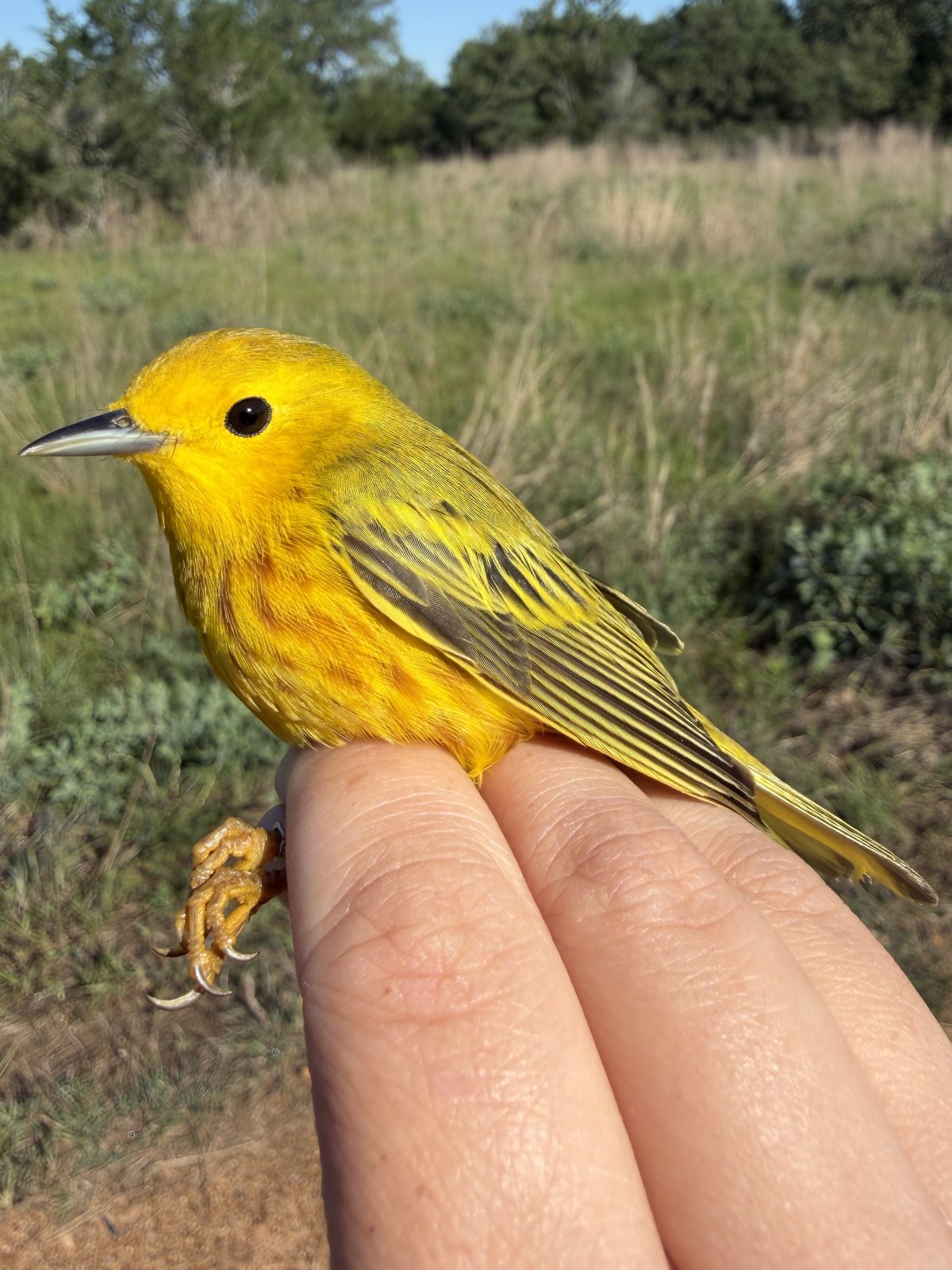
Yellow WarblerMay 2026 · Photo: Aeris Clarkson
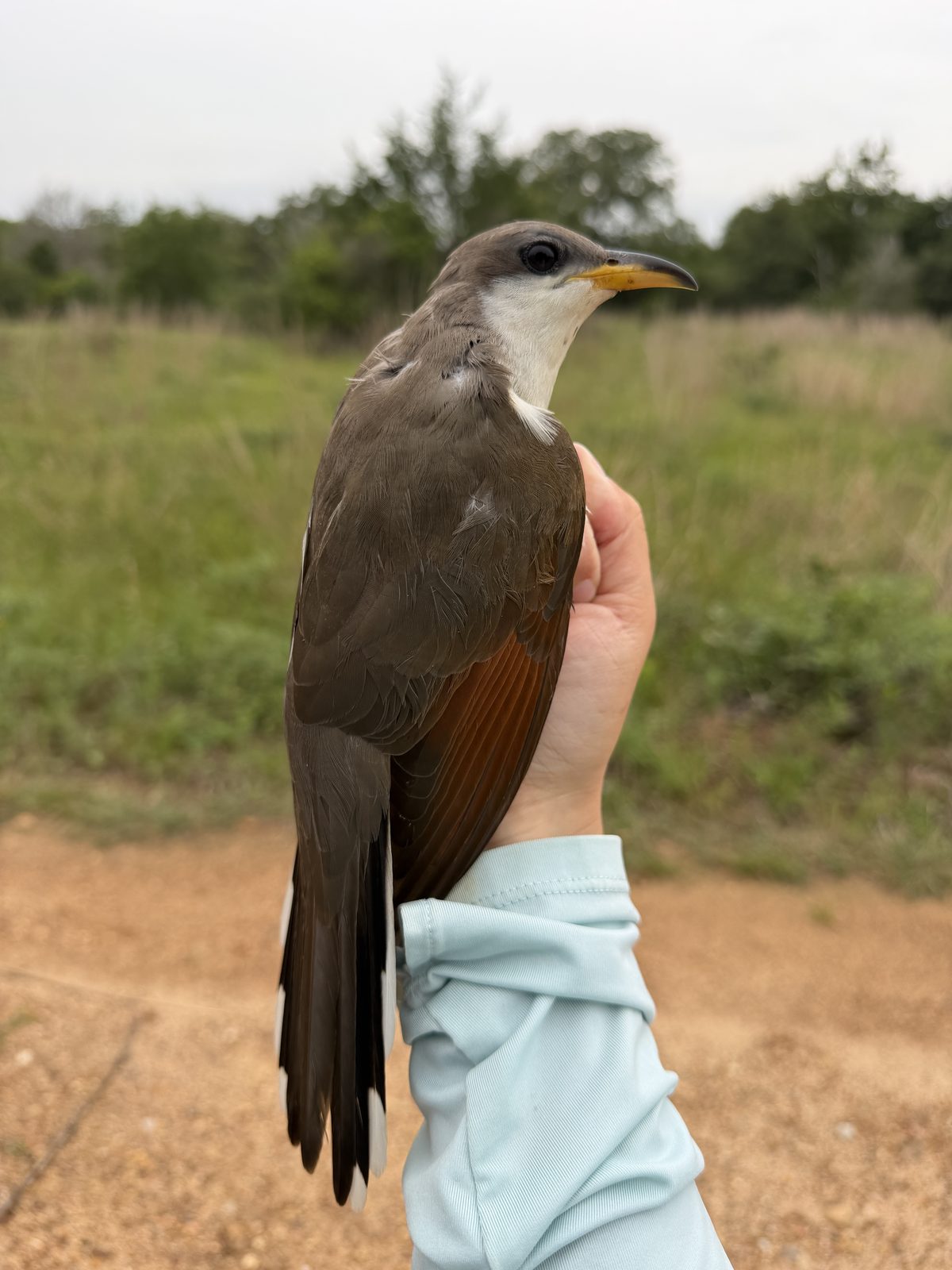
Yellow-billed CuckooMay 2026 · Photo: Aeris Clarkson
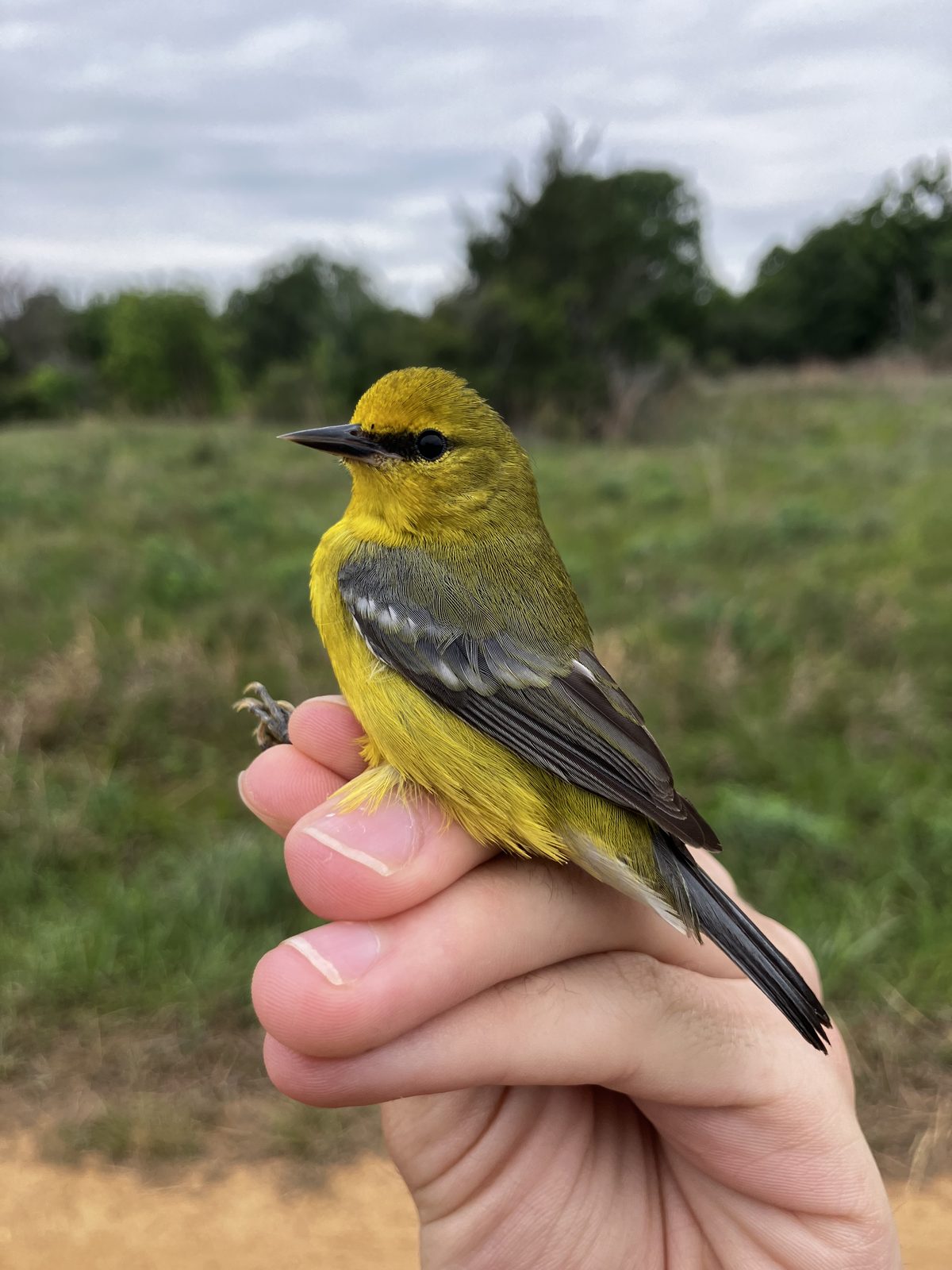
Blue-winged WarblerApril 2025 · Photo: Brady Schwab
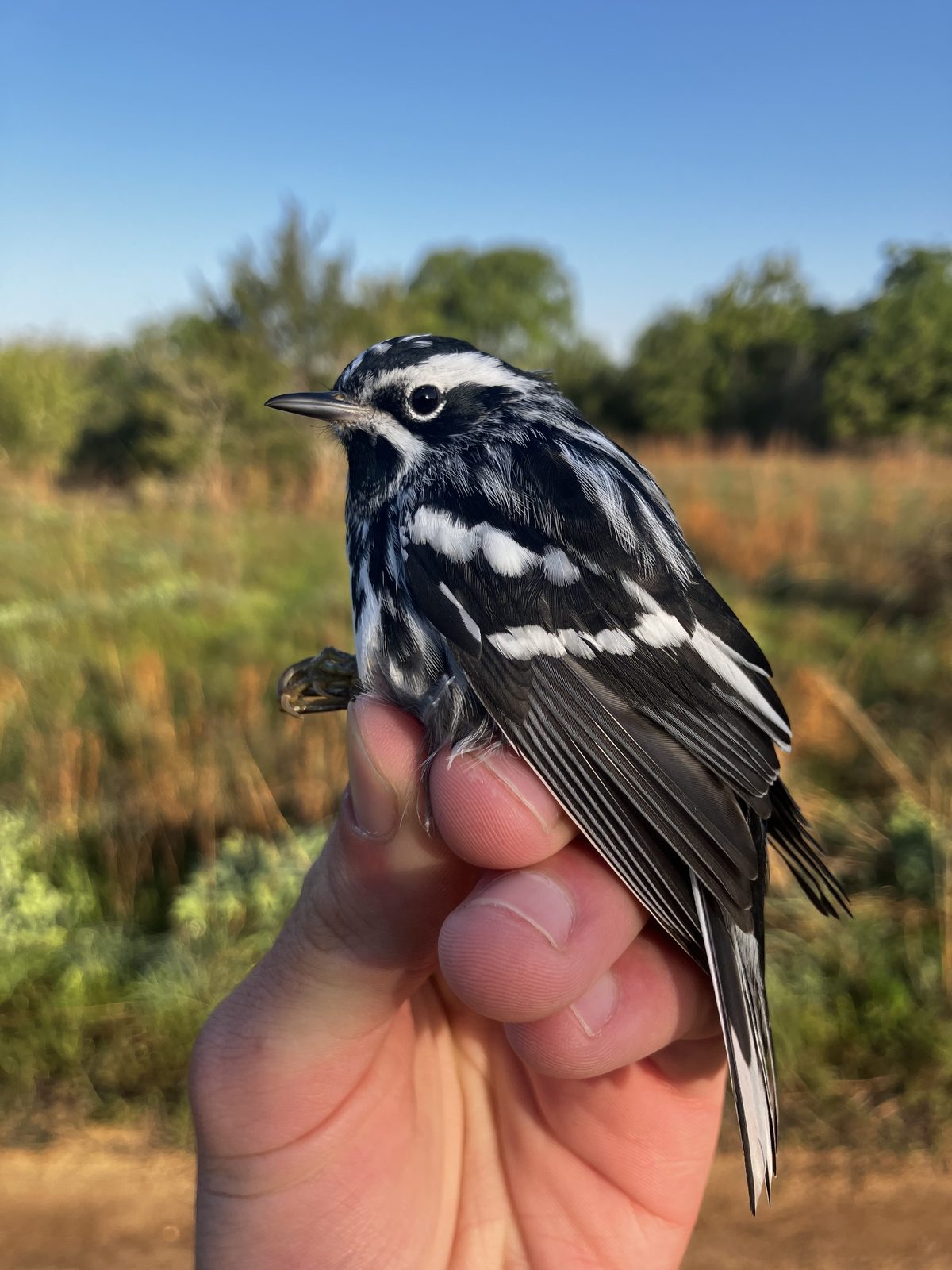
Black-and-white WarblerApril 2025 · Photo: Brady Schwab
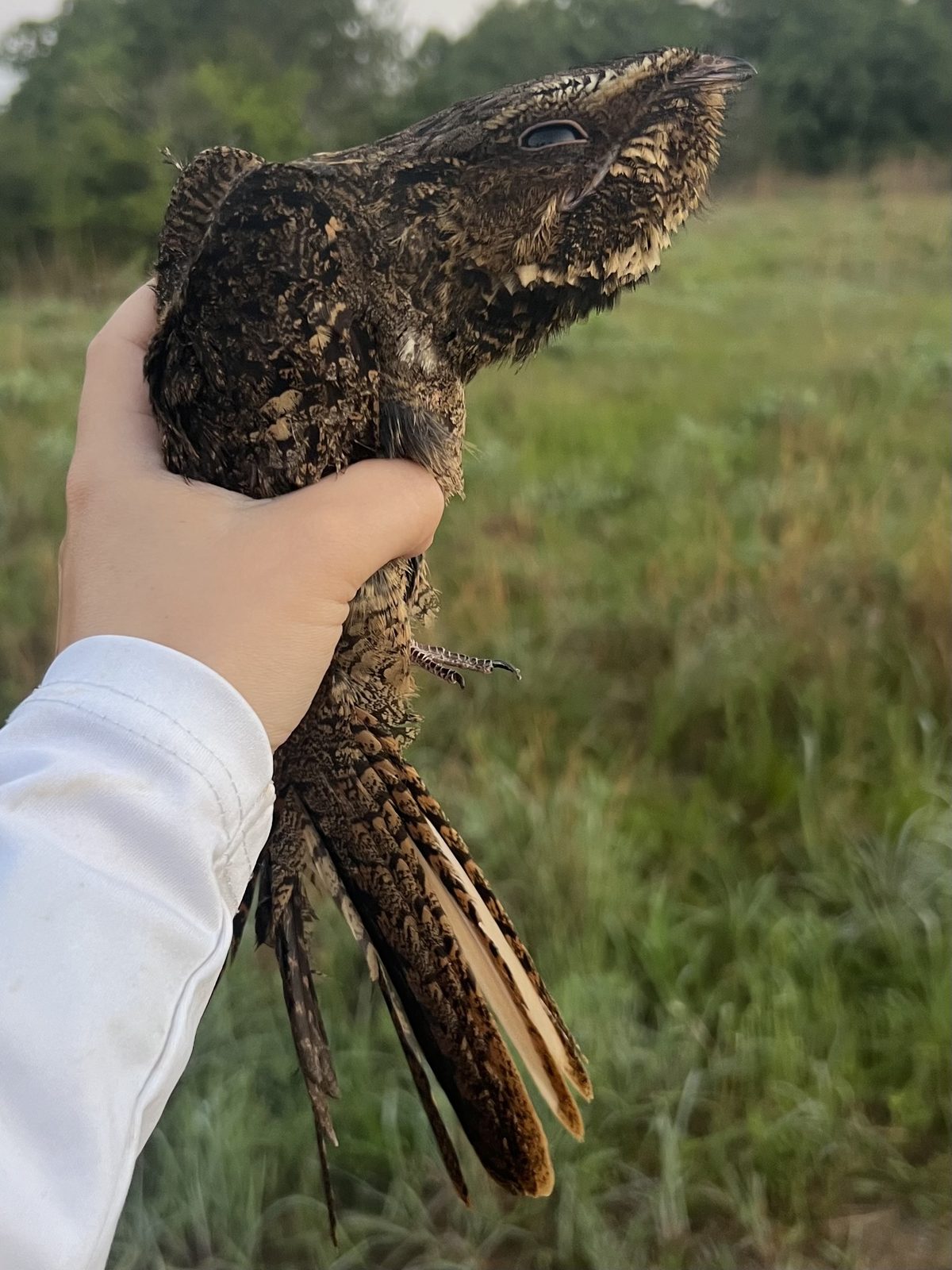
Chuck-will’s-widowApril 2025 · Photo: Aeris Clarkson
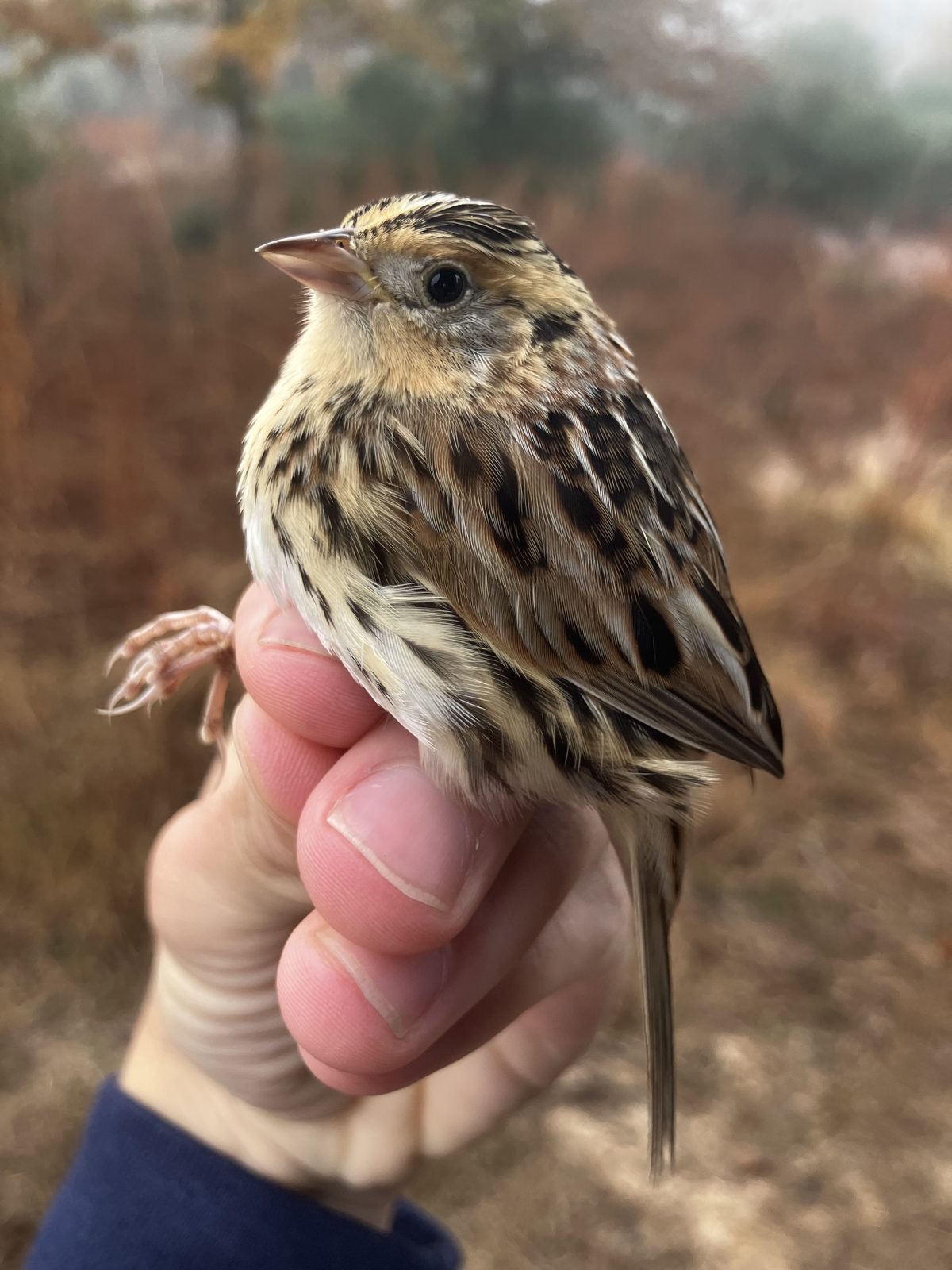
LeConte’s SparrowDecember 2025 · Photo: Brady Schwab
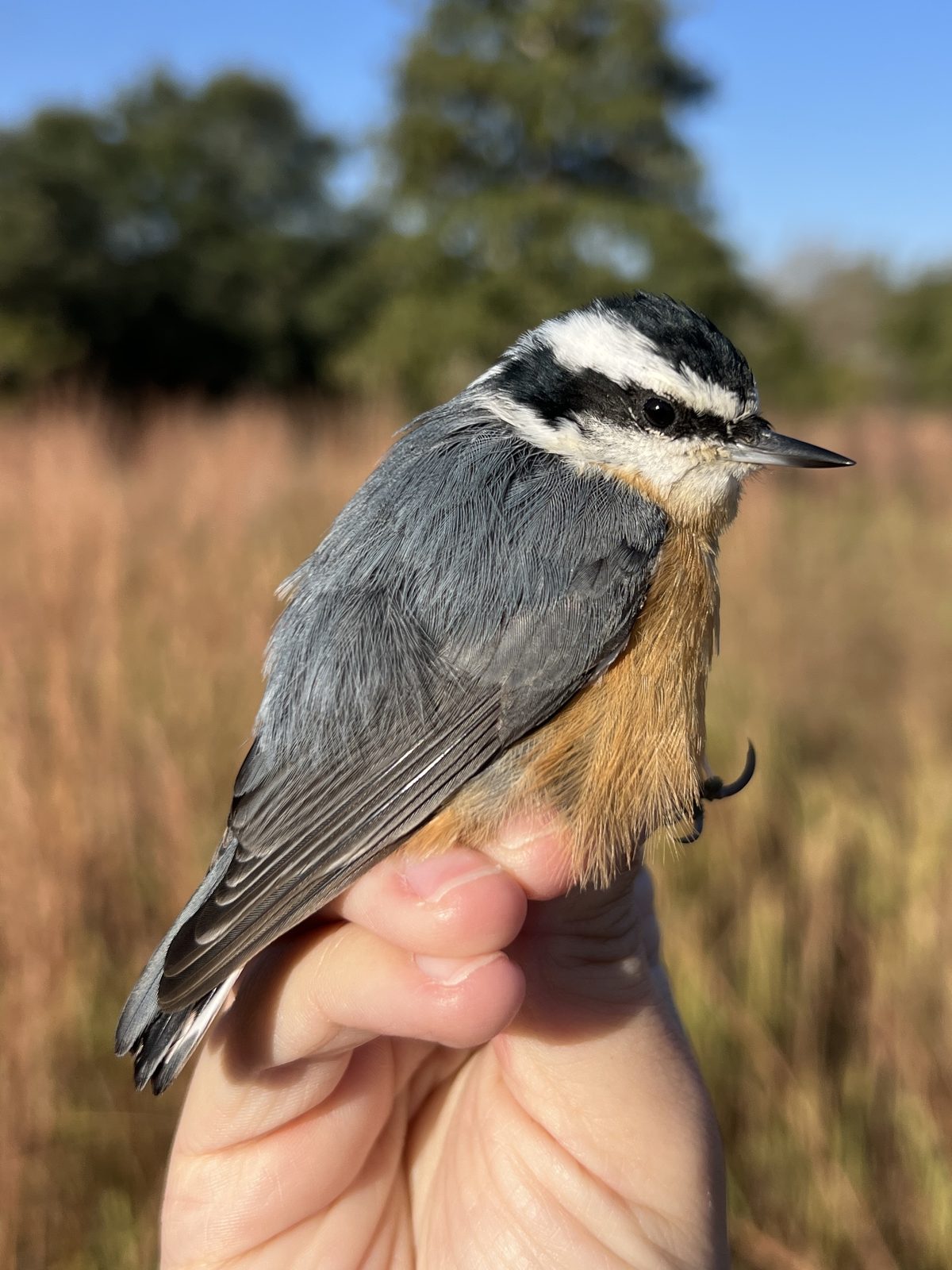
Red-breasted NuthatchOctober 2025 · Photo: Aeris Clarkson
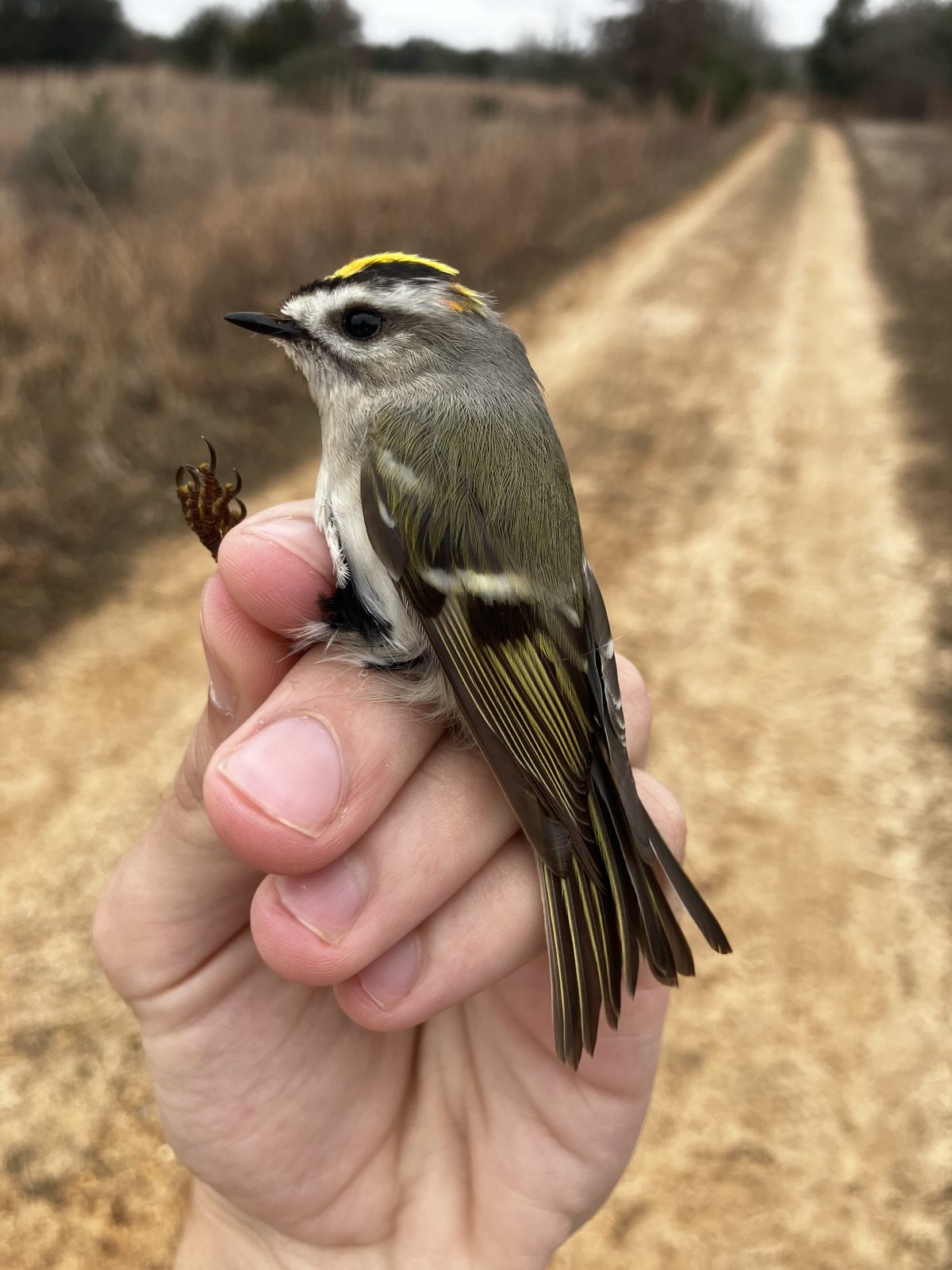
Golden-crowned KingletFebruary 2025 · Photo: Brady Schwab
Acknowledgments
We thank Rider Combs for supporting the Easterwood Banding Station and facilitating access to the site, Dr. Chris Butler for loaning equipment, and the students and volunteers whose time and effort make ongoing bird banding possible.